PETER'S COLUMN Views and Analysis
Want to go to Canada and be a tour guide in the future? Compare first course with substantive training
Peter uses TRU, Capilano and VIU as the starting point to organize the orientation of tourist management, substantive learning and OSSD selections.
Original date: Facebook 2026-09-15 shows "9:26 a.m. September 6th." (a) The years and time zones not shown have not been added to the records as shown by the platform; View original post ↗
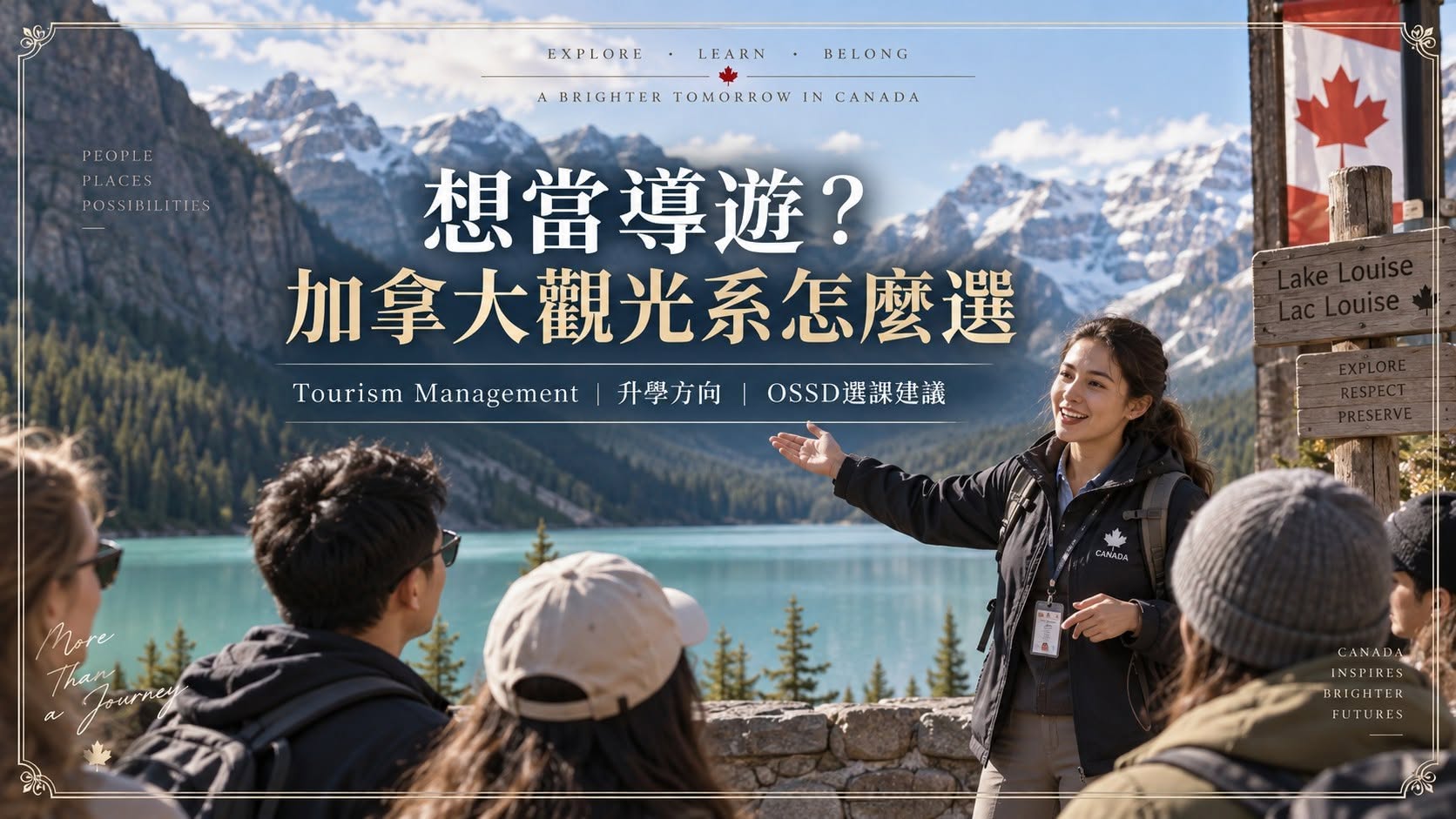
"I like to travel, I want to be a guide in the future, what should I study in Canada? Peter's proposal is to break down interest into work: do you prefer to talk about tourism, design tourism products, outdoor activities, or hotel and event management? The scope of study in tourist management is broader than in the field, and the selection of schools has to be aligned with the objectives.
TRU: First full course in tourist management
Bachelor of Tourism Management of Thompson Rivers University is the starting point for comparison. The official curriculum contains 120 credits and 500 hours of work experience requirements. Students should further check the course orientation they want to follow, how work experience is identified, and how international students apply.
This requirement reminds families that when comparing degrees, the total number of classes cannot be added only. The way in which the substantive experience is organized, and whether it affects the school term and accommodation plan, also affects the overall learning experience.
Capilano: Business capacity and practical work situation
The four-year Bachelor of Capital Management covers business, human resources, financial management and communication. The course also focuses on sustainability, community participation and experiential learning, and includes directions such as: sustainable community participation, and experience learning.
The official note includes a full-time co-op working term or substantive configuration under supervision. For students, it is even more interesting to ask what opportunities exist for their own preferred practice areas, what preparation needs to be done and what support schools provide. There are practical arrangements for the curriculum, which do not mean that each student has access to a job as a designated employer.
VIU: Recognition of entry from first grade or diploma
Vancouver Island University in Nanaimo offers Bachelor of Tourism Management. Officially classified as a four-year degree and with a co-op, the courses are also linked to the existing study tour, leisure and dining tours.
From the first grade onwards, applying for the third grade after holding the relevant diploma is not the same as the applicable curriculum. Students need to confirm the starting point of their application and compare which courses to the substantive study content, and not just see "four years" as assuming that all people are on the same path.
OSSD, what are you doing? Separation of recommendations from admission provisions
The original languages of Peter ENG4U, MHF4U or MDM4U, as well as BBB4M, Boh4M, etc., are the preparatory directions. These recommendations are aimed at building capacity in reading and writing, quantitative understanding and business organization; Whether or not they are taken into account in a school or not is mandatory, the current year is subject to a school-by-school review.
The selection should be preceded by a listing of the English language, mathematics, achievement and educational requirements of the targeted school, which should then be checked with the school tutor. A list of helpful subjects should not be misconstrued as a universal guarantee of admission to three universities.
If you want to be a tour guide, you'll have to make a separate column on working conditions.
Degrees, internships and qualifications for future work are three separate items to be confirmed. The ability to work locally upon graduation, as well as the requirements of the mission area, activities or employers, cannot be judged solely by the name of the faculty.
Peter's choice of school is that the preference for travel can be the starting point, but also the ability to communicate, plan, service and deal with problems on the ground. When families in Taiwan compare the three schools, they can start with courses and practical training and then calculate accommodation, transportation and the overall budget.
