
"Readering the System, Choosing the World"
Primary and secondary exchange students: the first rehearsal before leaving the country
A lot of families talk about this experience, and it's much more than, you know, kids go to classes, dinners, events, life, practice English in their daily interactions, and start to develop an independent, self-confident and international perspective. Into local classrooms, children feel the way in which classes abroad are taught.
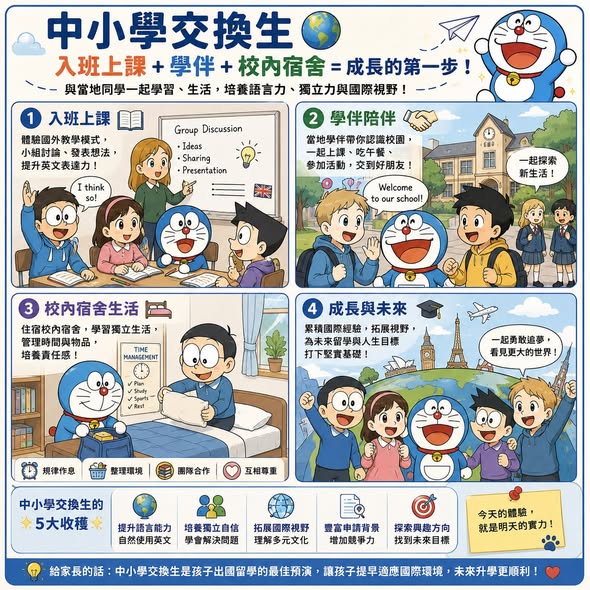
A lot of families talk about this experience, and it's much more than, you know, kids go to classes, dinners, events, life, practice English in their daily interactions, and start to develop an independent, self-confident and international perspective. Into local classrooms, children feel the way in which classes abroad are taught. Teachers often encourage students to ask questions, discuss, brief and work with groups, and students also need to express their thoughts in English. Such experience helps children to become familiar with overseas learning culture early in life and is expected to enter the situation faster when they are connected to overseas high schools, summer courses or university classes. For the first time in a school outside the country, the child needs to be led by a friend of the same age. Local school partners can accompany their children to school, have lunch, attend events and make English practice natural.
Children learn how to talk, join groups, understand cultural differences, and have the opportunity to build international friendship. In-school dormitories are early exercises for living abroad. The child has to prepare his/her own room, manage his/her belongings, offer co-operation, and learn to work with his/her roommates and dormitory teachers. This helps to build self-reliance, time management and group life, and enables parents to assess whether the child ' s future is suitable for long-term overseas study. Universities abroad value achievements, as well as students ' international experience, adaptability and personal growth. Exchange experience can be placed in future application documents and become a very hot point for resumes. Children can demonstrate that they have attended classes, worked with local students, participated in school activities, accommodated in school dormitories, and had an early understanding of the overseas educational environment.
The primary and secondary exchange is a good rehearsal before the child leaves the country. School attendance and understanding of foreign classrooms. Accompanied by a fellow student, practiced communication in English. In-school accommodation to foster independent living. Living with local classmates and developing cross-cultural experience. If the future target is, or click on the bottom label, see more of Peter's depth analysis
